The verb estar is essential in Spanish to express location, emotions, and temporary states. Let’s explore how to use it correctly and practice with examples.
🟨 Verb “Estar” — How Do We Use It?
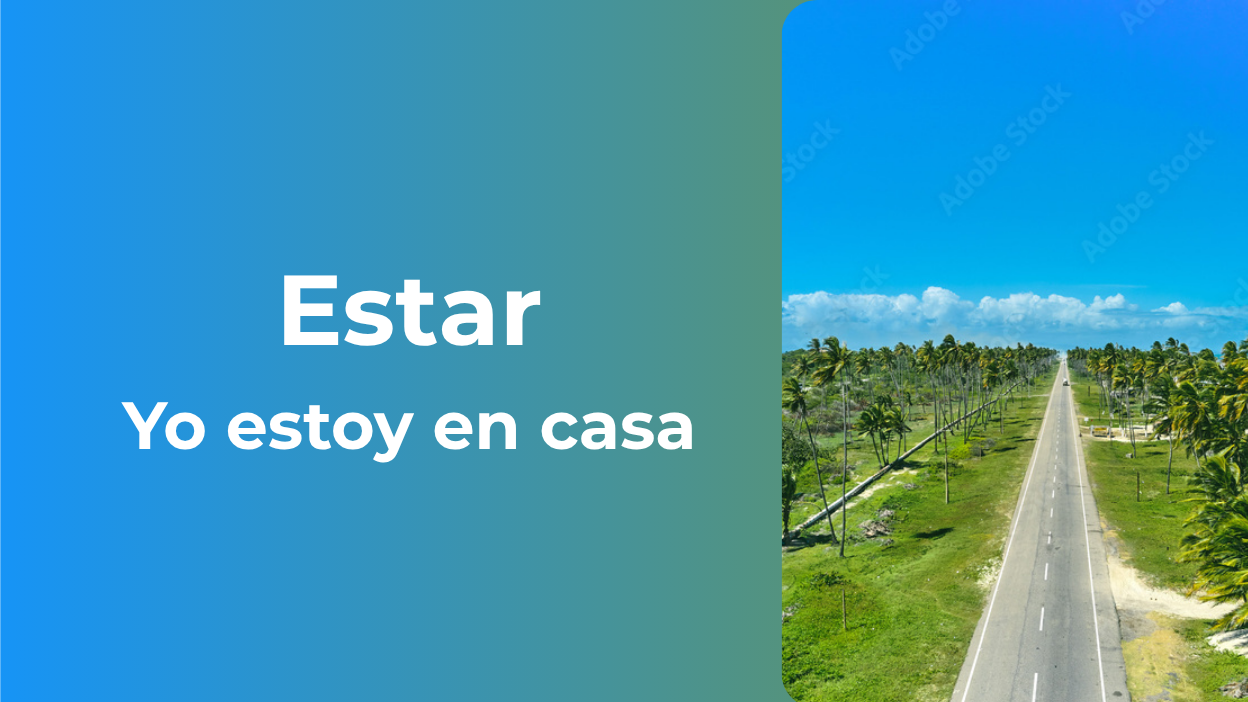
Let’s break down how to use the verb estar in Spanish, and let’s make an expression like this:
- Yo estoy en casa → I am at home
First, let’s look at the conjugation.
💬 Conjugation of “Estar” in the Present Tense
Notice how the verb changes depending on the subject pronoun.
| Subject Pronoun | Conjugation | Example in Spanish | English Translation |
|---|---|---|---|
| Yo | estoy | Yo estoy en casa | I am at home |
| Tú | estás | Tú estás en la escuela | You are at school |
| Él / Ella / Usted | está | Ella está en la tienda | She is at the store |
| Nosotros / Nosotras | estamos | Nosotros estamos en clase | We are in class |
| Ellos / Ellas | están | Ellos están en la oficina | They are at the office |
| Ustedes | están | Ustedes están en el parque | You all are in the park |
✅ Affirmative sentences
- Yo estoy en casa → I am at home
✅ Negative sentences
- Yo no estoy en casa → I am not at home
✅ Yes/No Questions
You can form yes/no questions by changing your intonation or using question marks.
- ¿Tú estás en casa? → Are at home?
✅ ❓ Questions
We can also use words like “dónde” to ask questions.
- ¿Dónde estás? → Where are you?
🟨 Common Uses of “Estar”
There are different uses of the verb “estar”, like:
- Location
- Emotions
- Temporary States
Let’s see examples of each one
📍 Location
- Yo estoy en el supermercado → I am at the supermarket
- Ellos están en clase → They are in class
- ¿Tú estás en casa? → Are you at home?
Yo ______ en la oficina.
estoy
Tú ______ en el parque.
estás
El libro ______ en la mesa.
está
Nosotros ______ en la clase de español.
estamos
Ellos ______ en el cine.
están
¿Dónde ______ mi mochila?
está
Ustedes ______ en el banco.
están
Mi gato ______ en la cama.
está
Mis amigos ______ en el centro comercial.
están
Yo ______ en la casa.
estoy
Traducir
I am here.
Yo estoy aquí.
You are there.
Tú estás allá.
He is home.
Él está en casa.
She is at the park.
Ella está en el parque.
We are at school.
Nosotros estamos en la escuela.
They are at the beach.
Ellos están en la playa.
The book is on the table.
El libro está en la mesa.
The keys are in the bag.
Las llaves están en el bolso.
I am in the car.
Yo estoy en el carro.
Where are you?
¿Dónde estás tú?
💬 Emotions
- Nosotros estamos felices → We are happy
- Ella no está triste → She is not sad
- ¿Ustedes están preocupados? → Are you all worried?
Yo ______ muy feliz hoy.
estoy
Tú ______ cansado.
estás
Ella ______ emocionada.
está
Nosotros ______ nerviosos.
estamos
Ellos ______ enojados.
están
¿tú _______ triste ?
estás
Usted ______ muy tranquilo esta mañana.
está
Mis hermanos ______ sorprendidos.
están
Yo ______ aburrido en esta reunión.
estoy
¿Cómo ______ ustedes hoy?
están
😷 Temporary States
- Tú estás enfermo → You are sick
- Él está cansado → He is tired
- ¿Ellas están listas? → Are they ready?
Yo ______ listo.
estoy
Tú ______ enfermo.
estás
Él ______ cansado.
está
Ella ______ feliz.
está
Nosotros ______ ocupados.
estamos
Ustedes ______ tristes.
están
Ellos ______ enojados.
están
Yo ______ sucio.
estoy
Tú ______ preocupado.
estás
Usted ______ bien.
está
✅ Wrap-up
Now you know that estar is used to express:
- Location
- Emotions
- Temporary physical/mental states